Guidance Frameworks.
Eight documented guidance areas, each rooted in the Talmon whole-food archive. Frameworks are designed for everyday application rather than idealised conditions. Each is reviewed quarterly and assigned a revision number.

Whole-Food Foundations
Meal Planning Protocols

Portion Awareness

Gut-Friendly Nutrition
Eight documented frameworks for everyday nutrition.
Whole-Food Foundations
A structured introduction to building a daily eating pattern around minimally processed, whole-food ingredients. The framework covers vegetable and fruit variety, whole-grain selection, legume integration, and the practical role each plays in sustaining daily energy and nutrient balance.
Documentation includes a seasonal UK produce assessment, ingredient origin records, and a simple preparation method index. The archive entry for this framework is updated each quarter as new seasonal produce batches are catalogued.
Meal Planning Protocols
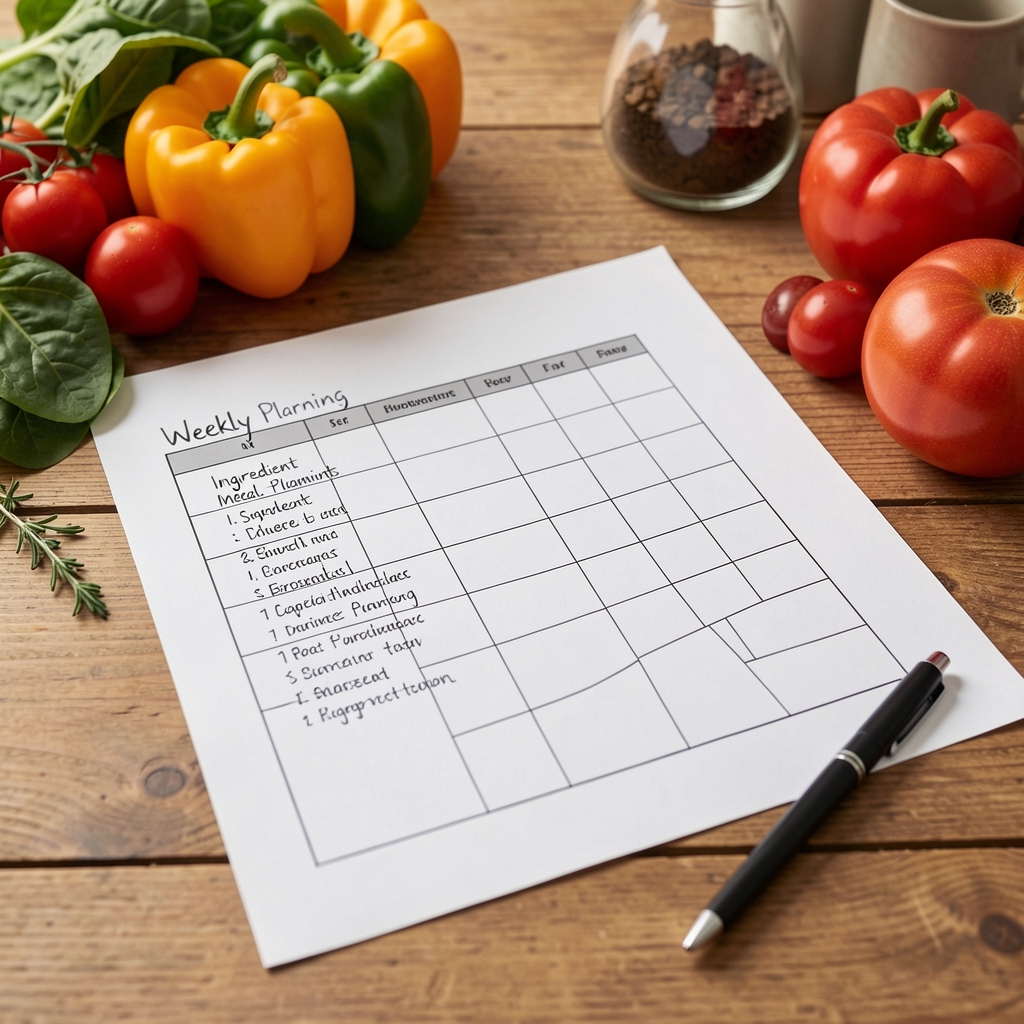
Seven structured weekly meal frameworks drawn from the Talmon observation archive. Each protocol is annotated with preparation time estimates, ingredient substitution options, and activity-level adaptations for sedentary, moderate, and active schedules.
Protocols are not rigid guidelines. They are reference structures that participants adapt to their own schedule and household. The archive records the most common adaptation patterns alongside the base framework.
Portion & Balance Awareness
A calibrated review of plate composition using visual reference systems rather than numerical targets. The framework introduces macronutrient ratio awareness through plate-based cues, removing the need for gram-by-gram tracking in most everyday eating contexts.
For participants with specific weight management or sport and fitness objectives, supplementary portion tables are provided, cross-referenced to the activity-level adaptations in the meal planning protocols.
Gut-Friendly Nutrition
Documentation of fermented foods, fibre-rich preparations, and plant-forward ingredient combinations that have consistently featured in published nutritional research on digestive wellness. Recipes include fermentation time records, sourcing notes, and preparation variation logs.
The gut-friendly recipe catalogue is expanded quarterly and includes both traditional UK fermented foods and documented international preparations accessible through standard UK ingredient suppliers.
Seasonal Cooking Archive
A quarterly-updated catalogue of seasonal UK produce with documented preparation methods, approximate micronutrient profiles by batch period, and combination recommendations. The archive tracks ingredient availability by region, noting London-market access versus wider UK seasonal windows.
Seasonal eating is documented for its practical effect on ingredient variety, cost efficiency, and micronutrient diversity across the year — not as an aesthetic preference.
Mindful Eating Practices
A documented set of eating-environment and meal-pacing practices drawn from observation records showing consistent association with improved satiety awareness and more stable weekly food intake. Practices include seated meal settings, screen-reduced environments, and deliberate meal-pacing techniques.
The framework is structured as a progression of small habit adjustments rather than a wholesale change to eating behaviour, making it compatible with existing meal routines and varied household schedules.
Sport & Active Nutrition
Meal frameworks adapted for active lifestyles, documenting the relationship between activity demand, food volume, and macronutrient composition. Frameworks cover recreational activity (3-5 sessions per week) through to structured training schedules, with specific attention to pre- and post-activity meal timing.
The sport and fitness nutrition documentation does not rely on supplementation as its foundation. All frameworks are built from whole-food ingredient sources with supplementation noted as optional where nutritional research supports a documented benefit.
Weight Management Frameworks
Documented approaches to weight management through sustainable habit formation rather than short-term restriction. Archive records from the UK observation cohort suggest that gradual, small-adjustment protocols produced more stable outcomes over 12-month periods than elimination-based approaches.
We recommend speaking with a qualified wellness or nutrition professional before introducing any supplement to your daily routine, particularly if you have specific dietary requirements.

Meal-prep documentation — Protocol MP-03, revision 04
Every framework carries a lot record.
Talmon guidance is not advice dispensed from a static document. Each framework is an active archive entry: it carries a revision number, a sourcing note, and a date-of-last-review. When published nutritional research prompts a change, the archive record is updated and the prior version is retained with an annotation.
This approach to documentation means the guidance reflects current understanding rather than the state of the field at the time of first publication. Participants can trace how a framework has changed and why.
Supporting resources in the archive.

Everyday Nutrition Audit
A structured self-assessment guide for mapping current eating patterns against the Talmon whole-food frameworks. Includes a three-day food-pattern record template and a scoring reference for variety, fibre intake, and processed-food frequency.

Real-Food Recipe Index
A continuously updated archive of whole-food recipes organised by season, preparation time, and primary ingredient category. Each entry includes sourcing notes, approximate nutritional composition, and documented variation records from the observation cohort.

Habit-Building Correspondence
A 12-week written correspondence programme documenting nutritional habit formation in real time. Participants receive weekly framework notes and submit a brief eating-pattern record. The correspondence archive is used to update the Talmon observation database.
Frequently noted enquiries about the guidance range.
Yes. Each protocol in the meal planning and portion awareness frameworks includes adaptations for sedentary, moderate, and active schedules. The sport and fitness nutrition framework provides additional documentation specifically for structured training loads.
Core framework entries are reviewed quarterly. Seasonal produce entries are updated at the start of each seasonal period. Where published nutritional research prompts an adjustment to a framework, the entry is updated with a revision note and the prior version is retained in the archive.
Most frameworks include documented ingredient substitutions that accommodate common dietary patterns including plant-based, gluten-free, and dairy-free eating. For specific requirements, we recommend discussing the relevant framework with a qualified wellness or nutrition professional before making substantial changes to your daily routine.
Archive entries are progressively published on this site. The full observation dataset and corresponding unpublished framework notes are available to correspondence programme participants. Contact the Talmon office to enquire about correspondence programme access.
Enquiries about a specific guidance area.
The Talmon archive desk is open Monday through Friday, 09:00 to 18:00, at 29 Hoxton Square, London N1 6NN. Phone and written enquiries are both welcomed.